
Self-portrait of a girl on the internet
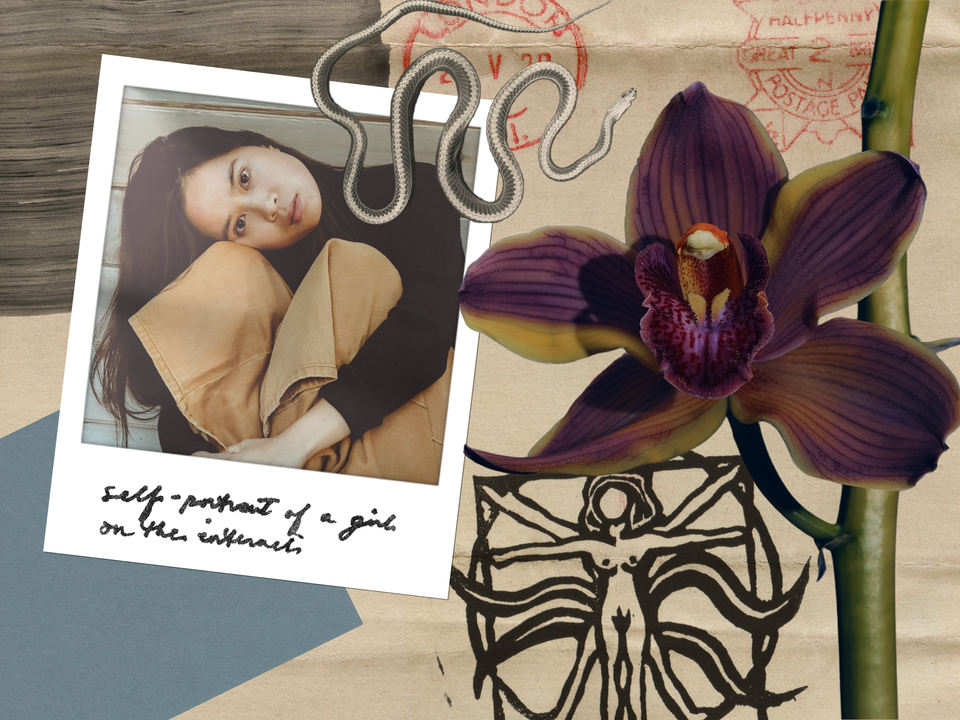
Coming of age with the internet left its scars. Barely teenagers, we would unwittingly wade into its unregulated depths of casual pornography and images of violence, its forums with strangers from all over the world, its playground of addictive flash games. We would explore the edges of making oneself visible on a new frontier: Friendster profiles customized from cursor to music, profile bios decorated with emoticons, low-res GPOY, a multitude of 2D avatars.
We would also learn very quickly the consequences of being visible. To post photos, especially if you were a girl, was to be self-obsessed. Narcissistic. Attention-seeking.
I have been called these things. I listened as people around me, men and women both, called other girls these things for posting silly-faced selfies. Slowly, the edges of self-expression in this new world were drawn. Show yourself, but not too much. Show yourself, but in the way you are expected to.
A quick learner, I immediately caught on that presenting myself online was a dangerous game. To express a fleeting thought as a status update or to post a selfie with a pretentious caption was to risk ruthless judgment from anonymous strangers. I've heard my own peers exhibit uncharacteristic meanness when faced with someone's unfiltered photo or newest relationship update. Admittedly, I've done this myself, and I would always feel deeply ugly as soon as the words leave my mouth, as though a hex cast through the internet had given the worst parts of myself permission to stretch beyond the walls I keep them in.
But was that not the whole point of these social media platforms? 1 Was their invention not an invitation to present oneself to a virtual public? Was it not—and this is important—the chance to have a modicum of control over how we are seen? We did not have to be a celebrity or politician to write biographies of ourselves. We did not have to be journalists to share stories and opinions on Blogpost, badly-written or otherwise. It is, like many things, a simple way of telling the world we multitudes of ordinary people, living ordinary, mundane lives, exist.
Such consequences also manifest outside of social media, but online the judgment is passed swiftly, without mercy, and for everyone to see in perpetuity. A flood of vitriolic comments, a lengthy call-out post, or leaks of hateful threads from private groups and conversations are difficult, if not impossible, to relegate as simply a bad memory. I've seen a teacher lose a job for posting a bikini photo on their personal profile. Women suffering the consequences of leaked or stolen photos even years after the violation. A bad opinion expressed in an old tweet haunting one's job prospects.
To a young girl witnessing these trials, it was a frightening risk. Invisibility was safety, so I scarcely posted. When I did, I’d make my posts visible only to a few. I’d keep my cards hidden, even when I wish to share more of myself to the small community I am fortunate to have. When I graduated high school, I deleted my original Facebook account and created a new one. With that, I added only the handful of people I regarded to be trustworthy.
I think about my ongoing struggles with vulnerability and how this experience shaped my relationship with it. This fear of being vulnerable is bad for a writer. When I express myself, even now, the voices of others almost always participate in that sacred, private conversation. Possible opinions on the depth of my neckline, the shade of my lipstick, or the wrinkles on my dress float to the surface of my attention. The personal details I divulge in essays like these, or my proclivity for run-ons. Inherently, I do not think this is a problem. It is simply the nature of being a social animal. Who I am, what I do, and how I show myself do create ripples because no one exists in a vacuum. We bristle against what we dislike, fixate on what we do. What matters is developing the skill to filter through the many voices to find mine. How do I wish to present myself, and why? Where is that impulse coming from? Whose opinions matter to me?
Many of my favorite photos of myself, I realized, are self-portraits. In them, taken often in complete privacy, I could control exactly what I project onto an image. The tilt of my mouth. Where light falls on my face. The expression in my eyes. The photos I end up liking are the ones I perceive to best reflect what I imagine myself to be.
But last week, while browsing through old photos, I came across a few that others had taken of me. I remember vividly how much those images viscerally disgusted me. How the photographs caught the roundness of my cheek, the scarred skin, the bad posture, my crooked teeth, my short figure. I felt so deeply angry that this was the body I met the world with. I wanted so badly to be beautiful.
Looking at those same photos now, I feel warmth. Sadness, too, at the memory of that self-hatred, so palpable it sometimes made me nauseous. The details I paid attention to are still there, but time has gifted me with a wider perspective. Those photographs were of moments of my life. In one, I had just finished watching a play. In another, I was with my family at a beach with the most unreal turquoise waters.
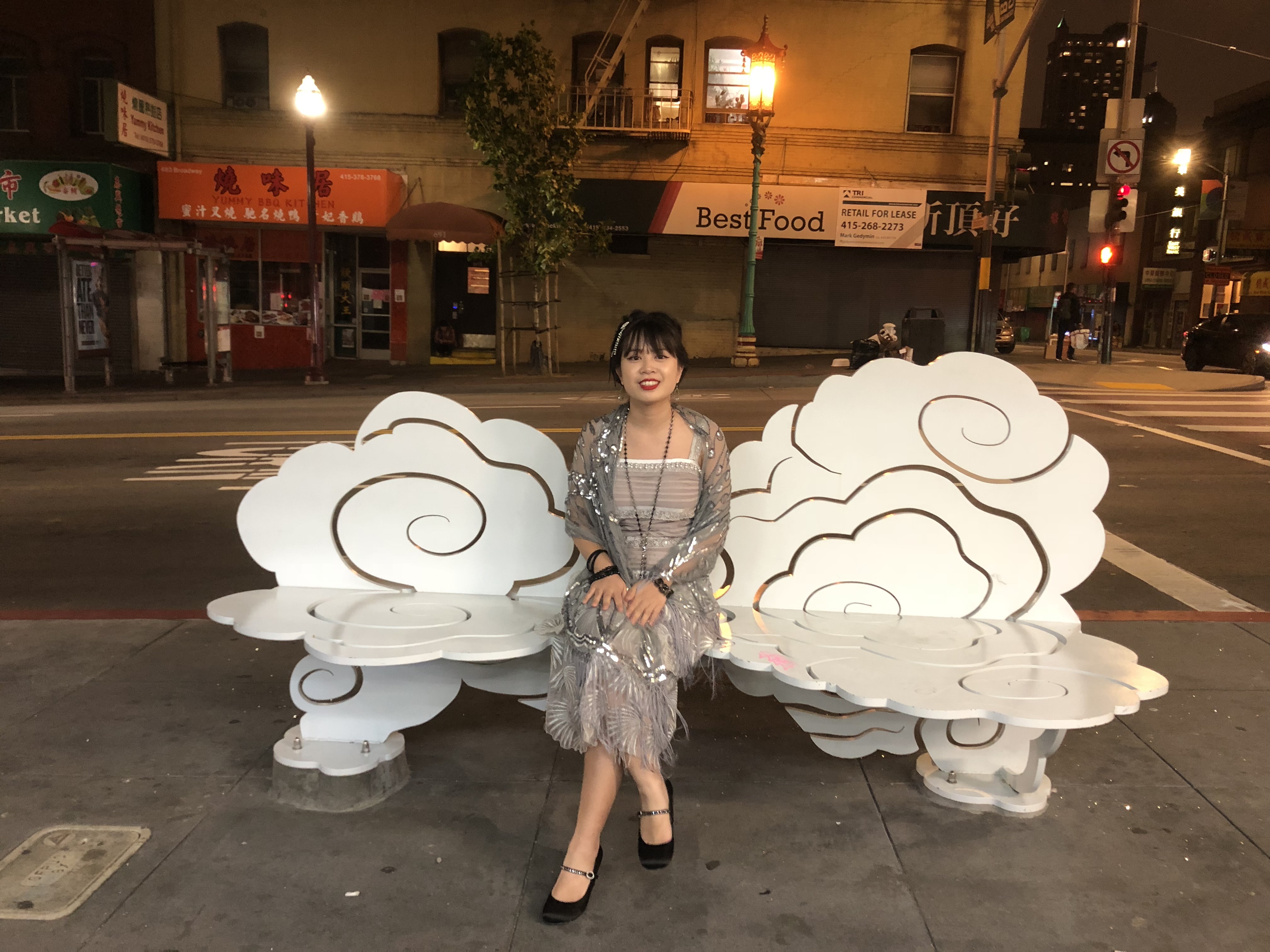
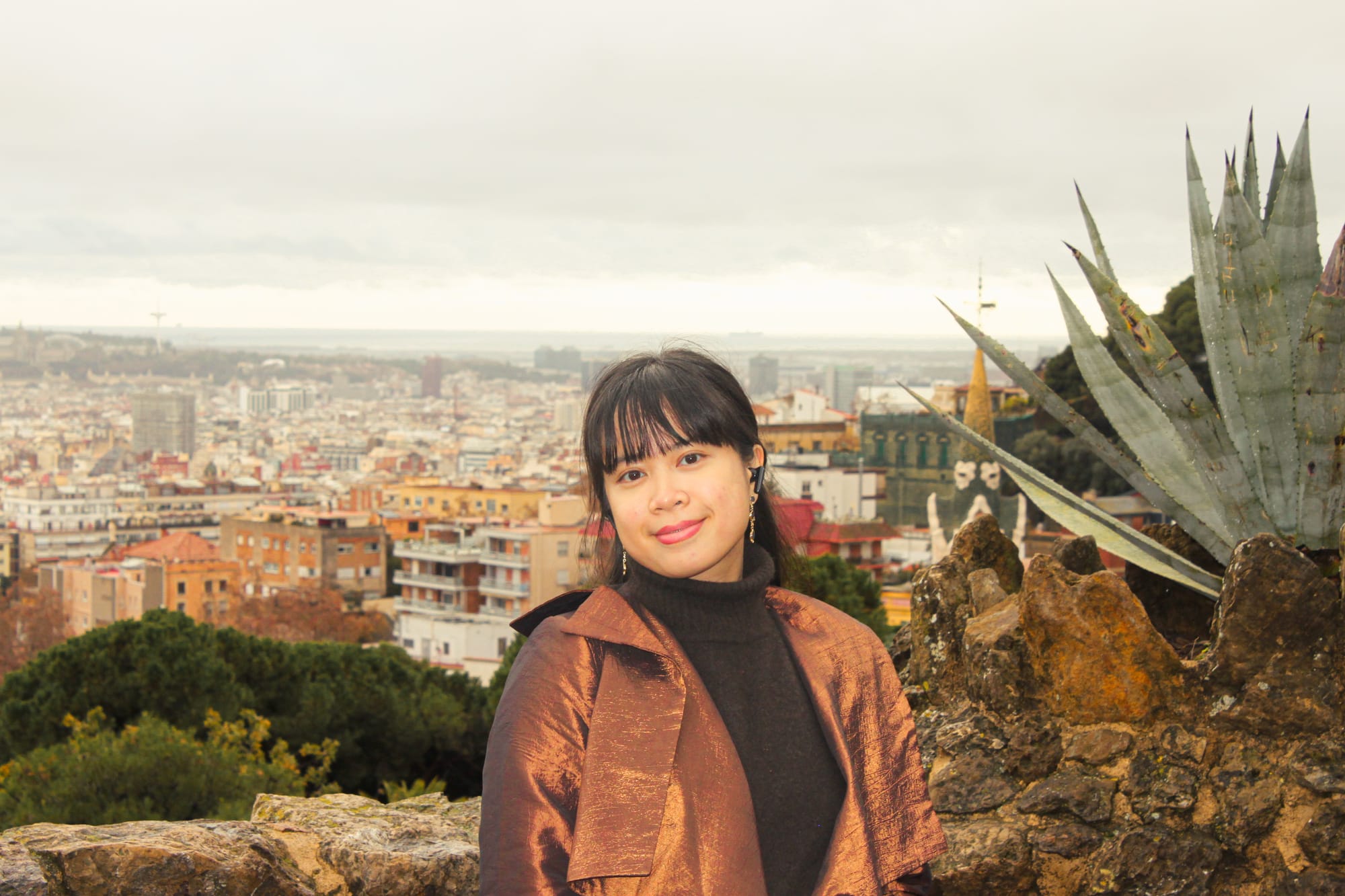

It is easy to dismiss this as a matter of vanity – a girl concerned with her self-image? groundbreaking – and while this is hardly the most pressing issue of our time, one's relationship with visibility forms the foundation of grander things. To be at ease in being visible is to take up space. 2 How can I ask for what I want and deserve if I don't even feel like I belong in the room? How can I speak when I constantly make myself disappear? How can I think to the best of my ability when I'm preoccupied with discomfort about my mere presence?
I think here of a line from X-Men: First Class – my favorite film of the franchise – delivered by Erik Lehnsherr, or Magento, to Raven, the blue-skinned shapeshifting mutant who, in her youth, always transformed into the socially-acceptable light-skinned blonde in the form of Jennifer Lawrence: "If you’re using half your concentration to look normal, then you’re only half paying attention to whatever else you’re doing."
How insidious it appears, doesn't it, to contemplate the way we as a society raise girls: attention perpetually splintered, an eye fixed on a one-way mirror where we regard both our reflection and how an invisible audience we know is watching must perceive us. We quickly, constantly assess ourselves in anticipation of critique and danger all while doing everything else – walking down the street, meeting a friend at the bar, playing a sport, boarding public transportation – and being dismissed as shallow for it.
One might be tempted to declare that the key is to simply not care about what other people think. I've always found that to be unhelpful advice, like skipping to the answer to a difficult math problem without bothering to look at the solution. It also centers other people even in its supposed disregard: yeah, I know people are there, watching and judging, but who cares?
A shadow of this impulse, a misunderstanding of it, tends to manifest as hyperindividualism – begetting another kind of problem – so I've turned inward instead, as always. Embracing the truth of my own existence first and foremost, and believing more than anything that I have value that need no further proof beyond being. From there, a fortification of my conviction in what I say and do. I paint my picture with these unassailable beliefs, and the disregard of other opinions naturally follows.
And then some days I think I'm overthinking it. Just post the damn picture.
While there may have been noble intentions at its inception, social media as we know it today is, of course, much more than just a virtual forum. Recognizing the value of visibility, the tech companies behind most social media platforms have corrupted it by turning attention into currency. We don't now just worry about how we are being perceived; we are constantly nudged to think about how we can profit off of it. Whatever self-empowerment was possible is crippled, disguised by the shiny pursuit of profit.
- Even when anonymity is desired, and not the by-product of the fear of being perceived, the intentional invisibility is a kind of visibility; a negative space shaped by one's desire for privacy, rather than an act of self-erasure.
Member discussion