How to hurt well
I.
Do you what you want, as long as it does not hurt anyone. This was, for a long time, the bedrock of my moral life. My values, which have naturally evolved over the years, orbited this basic tenet to do no harm. What good, sane person would be averse to this refusal to inflict pain upon others?
Pain is a given. It exists. It's in the mysterious, chronic ache in the hips. The grief that ebbs and flows without ever going away. The accidents, the outbursts, the ceaseless struggle to thrive in an unjust world. It hurts to love. It hurts to exist. And yet I had centered my entire moral worldview around the elimination of pain.
A silly, naive notion that now appears to me. At worst, it subtly controls and subjugates under the guise of goodwill, because while I may actively strive not to be a source of hurt, my pacificism does not shield me from the pain that permeates the state of being alive. This matters because pain is a kind of energy; it must be transmuted, or it will flow elsewhere. It doesn't disappear. So, what happens? Hurt people hurt people, goes that old truism; or, for pacifists like myself, they hurt themselves. Adept at staying quiet, we bear the pain of assault or injury with little noise in service of keeping the peace, because to say this hurts! you are hurting me! disperses the pain into the bodies of the other people in the room. There would be discomfort, commotion, a disturbance. It could spark a wildfire of hurt. In a twisted, yet logical way, under do no harm, the right course of action would be to just bear it. Allow the pain to sink deep into the bones and the fibers of the muscles, eroding the bearer from within.
II.
The trick with pain inflicted by others is, when possible, to reflect it. Send it back to the kitchen with a firm no, thank you. While it may appear as an escalation — you didn't have to embarrass the man (who just insulted you)! — in truth it's just a refusal to take on someone else's burden. That the pain exists in them is not my responsibility. To some this may be obvious, but I admit this took me a long time to grasp.
To retaliate, from the Latin retaliatus, is to exact payment in kind. Interestingly, in the corporate world, retaliation refers to unjust punishment, often used in the context of prohibiting employers from taking unfair action against employees for exercising legally protected rights. A good thing, yes — and yet closer inspection surfaces a more complex picture. Common usage of the word has significantly shifted the implied power dynamic. At its root, to retaliate was not to take more or less, but to exact in equal measure; a response commensurate to the action. An eye for an eye, if you will. At present, it is more often used to convey punishment, payback, or a penalty, something done to diminish the offending party. The inflicted suffering returned amplified.
It's good then, isn't it, to not retaliate? So why do I feel disarmed?
III.
I do not wish pain on anyone, but I also now know no one is spared from it. I don't want it for myself, but it will come, and when it does I can only choose between two options: bear it well or do so badly.
Badly is when I had my hair bleached at a salon for the first time and the stylist, who had been juggling multiple clients simultaneously, left the bleach for too long on my scalp. The burn is normal, I chanted mentally to myself as searing pain rolled across my skin. Whimpers held back by the sheer refusal to be seen as weak. Only when the person seated next to me said I think smoke is coming out of your head did the stylist finally come back to rinse off the chemicals from my hair. I never said out loud that I had been severely burned.
Badly is when, soaked in the sludge of an argument with my parents and an admonishment at work, I had said unkind words to my undeserving sister that I didn't mean.
Badly is when, refusing to take a precious sick day, hoarding those for when I'm "truly unwell", I sat at my desk curled into a ball from a horrible case of dysmenorrhea. Nauseous, dizzy, and fatigued at the keyboard, doing work that, really, mean nothing to no one.
Badly is when months of symptoms go ignored, blossoming finally into – you get it.
IV.
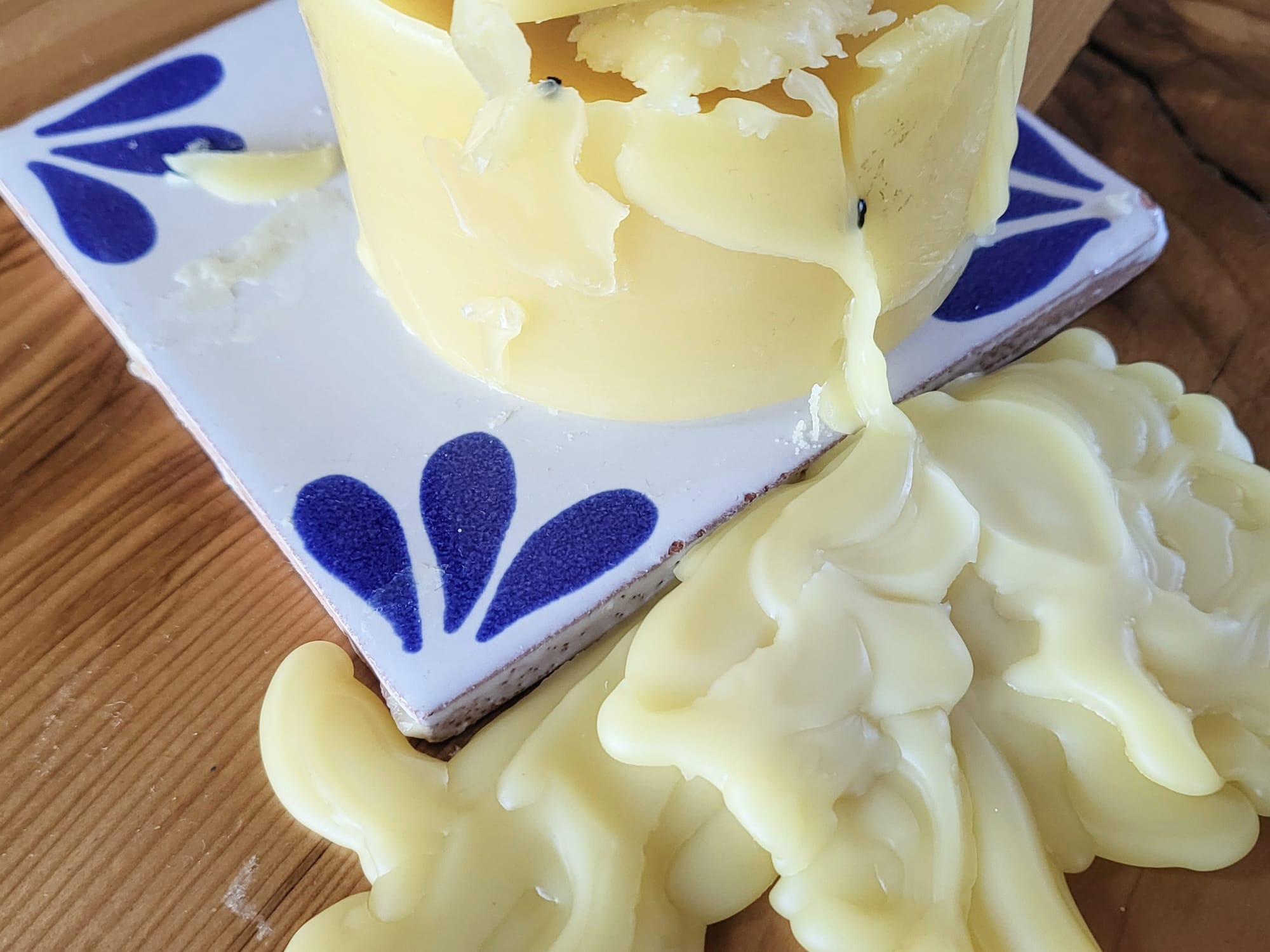
Pain and illness alter. They insist: "All day, all night the body intervenes." They invent: "blunts or sharpens, colors or discolors, turns to wax in the warmth of June, harden to tallow in the murk of February." They isolate: "There is a virgin forest in each; a snowfield where even the print of birds' feet is unknown." They isolate: "Here we go alone, and like it better so." They invent: "other tastes asserts themselves; sudden, fitful, intense." They insist: "This monster, the body, this miracle, its pain." [1]
V.
To bear pain well, I must first strengthen my capacity to discern which must be endured, and which must be soothed. Pain is a vast spectrum — from discomfort to gushing wound to psychological torture — and the pain I speak of here encompasses all its hues. I do not glorify pointless suffering, [2] but I find the blind pursuit of painlessness to be equally problematic. Like the principle of do no harm, aspiring for painlessness appears benign – good, even – until another close inspection reveals its insidious implications: pain outsourced elsewhere, pain postponed.
Some logical conclusions to the manic obsession to eradicate pain from every corner of our lives:
Why struggle to earn knowledge — to experience the discomfort, the confusion, the frustration of learning something new — when you can ask your favorite AI assistant to fetch and explain the information for you? [3] In exchange for such blissful convenience, rural communities, where data centers are planted to support our ever-growing technological hunger, endure relentless air and noise pollution, higher utility prices, poisoned water.
Why endure the pain of confronting mortality, of seeing in the mirror a face weathered by years hardly remembered, when we can pull our sagging skins taut against our skulls and hide the stitches beneath our hair? [4]
Why feel when we can numb ourselves with one (or several) of many delicious vices? Work, sex, drugs, alcohol, social media, chronic online shopping; sweet balms for wounds we refuse to heal. [5]
Why withstand a blow to one's ego — a critique of one's ability or unchecked behavior — when we can carry on in ignorant bliss?
In the noble, necessary pursuit of accessibility, we often conflate access with ease. Nothing should be easy (a controversial statement, perhaps), but everyone deserves the same right to join the fray and struggle with the rest of us.
Out of practice, we're stirring a fuss about pain we should bear, and enduring what must be resisted. [6]
VI.
Then there is the matter of inflicting pain. Unthinkable to this former pacifist, knowing how to wield a blade – metaphorically or otherwise – is essential to life.
I should have known this the moment I was taught to slaughter a chicken for the first time. With an incomplete cut, the poor animal bled and thrashed around in my hands; a good, decisive slice was its mercy, and, in another life where I would have had to raise my own food, a necessity for survival.
The same is true elsewhere: speaking a difficult truth, walking away from an untenable relationship, severing ties with an abusive family — all these require the finality of a knife. A decisive cut, not a violent tear. Even with the honest wish not to cause others pain, I have unwittingly done so, and will probably continue to. I'd rather do it well than by accident.
This will hurt; and then it won't.
Notes
[1] Excerpt from Pain Studies, Lisa Olstein (Bellevue Literary Press, 2020).
[2] What one should or should not suffer is a deeply subjective question, and I imagine our answers change over time. By default, I am averse to painkillers for cramps or migraines, or ibuprofen for fevers within a certain threshold, but I absolutely refuse to be feasted on even by a pair of mosquitoes.
[3] This may come as a surprise, but I don't adopt a purist view about AI. I don't think it should invade every aspect of our lives (for the love of God, I do not want an AI inbox), nor do I think we should put it back in the box (as if we could). The opportunity to delegate mindless, repetitive tasks to AI in order to free up time for more meaningful pursuits is something I welcome. Is this not what machines are for — making work easier?
Alas, as with every other incredible machine invented by human minds, AI is being used for much more than that, many of which go back to the desire to eliminate pain. Demand for energy and natural resource is skyrocketing and for what? The most boring cartoon render of a selfie? Marketing flyers that don't attract customers? A response to a serious text you can't be bothered to process yourself?
(Before this invites suspicion, no, I do not use AI at any stage of my writing. Research through my personal library and search engines is easy enough, and I wish to continue to possess the ability to write sentences, so I will never use it for my creative work.)
[4] Beneath the gloss of you deserve to look and feel your best is a billion-dollar industry literally invested in keeping people, mostly women, insecure. While I'm sure cosmetic plastic surgery can feel good and be positively life-changing, it is only as empowering as the ever-changing beauty standards in a patriarchal, capitalist society allow. More thoughts on this rather nuanced issue another time, perhaps.
[5] I say this without judgment; I have my own ways of bearing the load.
[6] I think here of how the disruption caused by protests is considered detestable by the average person, while the systemic suffering of the general public caused by government corruption and collusion — whether it be floods due to ghost projects in the Philippines or the dilapidated schools in France — is something we are taught to endure. Life's not fair, ganyan talaga ang buhay, etc. Yes, the riots, looting, and vandalism some protests leave in their wake are not ideal either — concerns about safety here are real and immediate — but shouldn't the widening economic inequality elicit just as much abhorrence?
On a much smaller scale, I just watched a video of a content creator expressing disappointment over a $150 advent calendar from SKIMS which was filled with little more than obvious warehouse scraps: scrunchies, branded clips, keychains, and knickknacks that could not have cost the company more than $3 to produce. Absolutely, getting ripped off in this economy is frustrating — but maybe we should all step back and think about why and how we've allowed consumerism to govern our lives as much as it does. There's a deeper pain here, but most of us are too afraid to speak it.
Member discussion